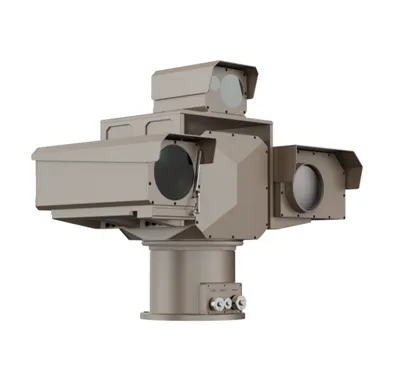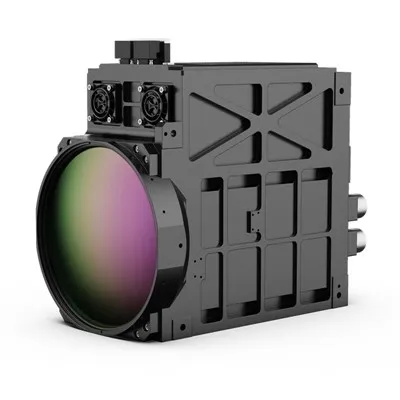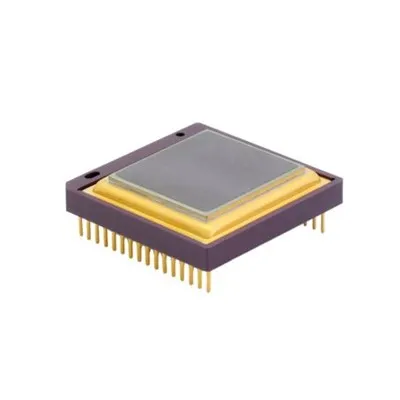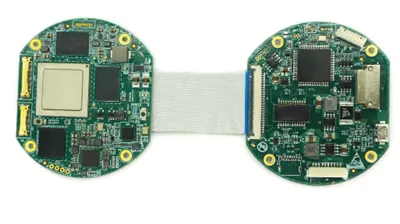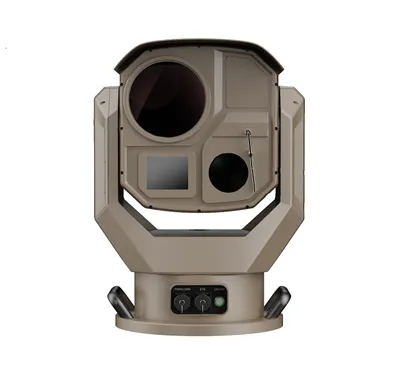

Hey there! As a supplier of MWIR camera lenses, I often get asked if these lenses can be used for surveillance in smart cities. Well, let's dive right in and explore this fascinating topic.
First off, what exactly is an MWIR camera lens? MWIR stands for Mid - wave Infrared. These lenses are designed to work in the mid - wave infrared spectrum, which is in the range of about 3 to 5 micrometers. Unlike visible light cameras, MWIR cameras can detect heat signatures. This gives them a unique edge when it comes to surveillance.
In smart cities, surveillance plays a crucial role in maintaining safety and security. Traditional visible light cameras are great, but they have their limitations. For example, they don't work well in low - light conditions, like at night or in foggy weather. That's where MWIR camera lenses come in handy. They can see through darkness, fog, and even some smoke because they're detecting heat, not visible light.
Let's talk about some of the specific applications of MWIR camera lenses in smart city surveillance. One of the key areas is traffic monitoring. With the increasing number of vehicles on the roads, it's important to have a reliable way to keep an eye on traffic flow. MWIR cameras can detect the heat from vehicles, even in the middle of the night. This allows for accurate traffic counting, speed monitoring, and incident detection. For instance, if there's an accident on the highway, the heat signatures of the damaged vehicles and the stopped traffic can be easily picked up by the MWIR cameras.

Another important application is perimeter security. In smart cities, there are many critical infrastructure sites, such as power plants, water treatment facilities, and government buildings. These places need to be protected from unauthorized access. MWIR camera lenses can be used to monitor the perimeters of these sites. They can detect the heat signatures of people or animals approaching the area, even if they're trying to hide in the dark. This provides an early warning system, allowing security personnel to take action before any damage is done.
Now, you might be thinking, "Sounds great, but are there any challenges?" Well, like any technology, MWIR camera lenses do have some challenges. One of the main challenges is the cost. MWIR cameras and lenses tend to be more expensive than traditional visible light cameras. This is because the technology used to manufacture them is more complex and the materials used are often more expensive. However, as the technology advances and the demand increases, the cost is gradually coming down.
Another challenge is the maintenance. MWIR camera lenses need to be properly maintained to ensure optimal performance. They can be affected by dust, dirt, and moisture, just like any other optical device. Regular cleaning and calibration are necessary to keep them working well. But don't worry, we offer support and guidance on how to maintain the lenses to make sure you get the most out of your investment.
If you're interested in learning more about our MWIR camera lenses, you can check out these links: Mid - wave IR Thermal Imaging Lense and Fix MWIR Thermal Imaging Camera Lens. These pages provide more detailed information about our products, including their features, specifications, and applications.
In conclusion, MWIR camera lenses have great potential for use in smart city surveillance. Their ability to detect heat signatures gives them an advantage over traditional visible light cameras, especially in challenging lighting conditions. While there are some challenges, like cost and maintenance, the benefits far outweigh them.
If you're in the market for MWIR camera lenses for your smart city surveillance project, we'd love to have a chat with you. Whether you're a city planner, a security contractor, or someone else involved in the smart city initiative, we can provide you with high - quality MWIR camera lenses and the support you need. Contact us to start a discussion about your specific requirements and how our products can fit into your plans.
References:
- Johnson, W. (2020). "Infrared Technology in Modern Surveillance Systems". Surveillance Journal.
- Lee, S. (2021). "Advances in Mid - wave Infrared Optics for Smart City Applications". Optics Research.