
Optoelectronic systems play a crucial role in space exploration, offering a wide range of solutions from sensing and communication to navigation and imaging. As an optoelectronic systems supplier, I've seen firsthand how these technologies are shaping the future of space missions. In this blog, I'm going to walk you through some of the key optoelectronic systems used in space exploration.
1. Optical Imaging Systems
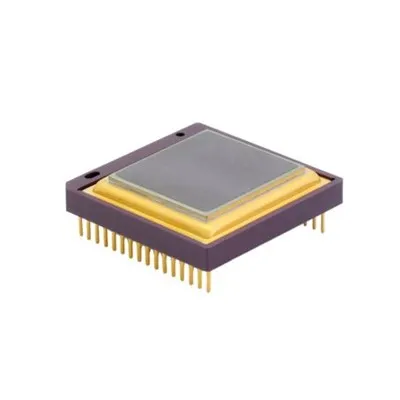
One of the most fundamental applications of optoelectronics in space is optical imaging. High - resolution cameras are essential for observing celestial bodies, mapping planets, and studying space phenomena. These cameras use advanced sensors like charge - coupled devices (CCDs) or complementary metal - oxide - semiconductor (CMOS) sensors.
CCDs have been used for a long time in space telescopes because of their high sensitivity and low noise levels. They can capture detailed images of distant stars, galaxies, and nebulae. For example, the Hubble Space Telescope has revolutionized our understanding of the universe with its CCD - based imaging systems.
CMOS sensors, on the other hand, are becoming more popular due to their lower power consumption and faster readout times. They are often used in smaller satellites for Earth observation and space debris monitoring.
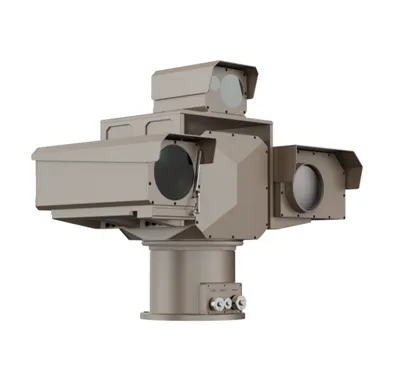
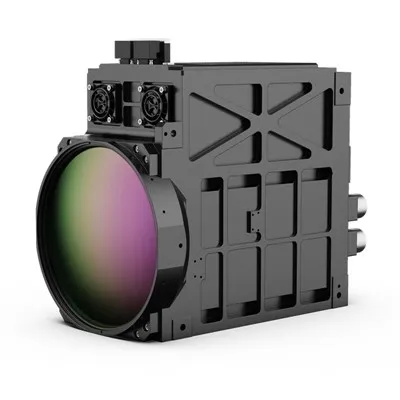
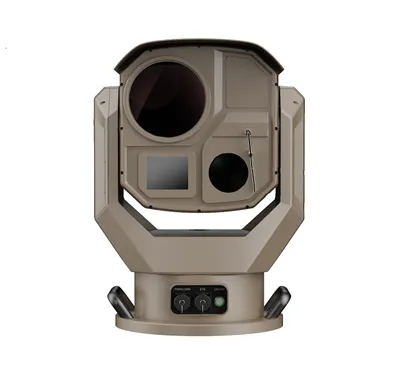
Our company offers a variety of optical imaging solutions. The Multi - Spectral EO/IR Gimbal Pod (EO/IR/LRF) is one such product. It combines multiple spectral bands and a laser rangefinder, providing high - quality imaging and accurate distance measurement. This pod can be easily integrated into space probes or satellites, making it an ideal choice for various space exploration missions.


2. Optical Communication Systems
In space, traditional radio communication can have limitations in terms of bandwidth and data transfer rate. Optical communication systems offer a potential solution. They use laser beams to transmit data, providing much higher data rates compared to radio waves.
Optical communication in space has several advantages. First, the laser beam has a very narrow beamwidth, which means less interference from other sources. Second, the high - frequency nature of light allows for a large amount of data to be transmitted in a short time.
For deep - space missions, optical communication can significantly reduce the time it takes to send scientific data back to Earth. For example, if a Mars rover discovers something new, an optical communication system can quickly transmit high - resolution images and detailed scientific data.
Our Radar Integrated EO/IR System can also be adapted for space communication applications. Although it's originally designed for anti - drone and surveillance purposes, its integrated optoelectronic components can be modified to work in a space environment, enabling reliable data transmission.
3. Optical Navigation Systems
Accurate navigation is vital for space missions. Optoelectronic navigation systems use sensors to detect celestial objects and calculate the position and orientation of a spacecraft.
Star trackers are a common type of optical navigation system. They identify stars in the sky and compare their positions with a pre - stored star catalog to determine the spacecraft's attitude. Another example is the use of optical sensors to detect the position of planets or other celestial bodies for orbital maneuvers.
Our Coastal Electro - Optical Tracking System has the potential to be used in space navigation. Its high - precision tracking capabilities can be adapted to tracking stars, planets, or other navigational beacons in space, helping spacecraft stay on course.
4. Thermal and Infrared Sensing Systems
Thermal and infrared sensing are important for understanding the temperature distribution on celestial bodies and detecting faint heat sources in space. For example, infrared sensors can detect the heat signatures of volcanoes on planets or the emissions from interstellar dust clouds.
These systems are also useful for spacecraft thermal management. By monitoring the temperature of different components of a spacecraft, the onboard system can adjust the cooling or heating mechanisms to ensure optimal operation.
Our Thermal Optical Tracking System is designed to track targets based on their thermal signatures. In a space context, it could be used to detect and monitor celestial objects with unique thermal characteristics, like active asteroids or comets.
5. All - Weather Optoelectronic Systems
Space is a harsh environment with extreme temperatures, radiation, and dust. All - weather optoelectronic systems are designed to withstand these conditions and provide reliable performance.
All - weather systems are equipped with protective coatings and shielding to protect the optoelectronic components from radiation damage. They also have heaters and coolers to maintain the optimal operating temperature.
Our All - Weather EO IR Pan and Tilt System is built to be robust and reliable in challenging environments. It can be used for continuous monitoring and imaging in space, ensuring that space missions can operate smoothly regardless of the surrounding conditions.
Conclusion and Call to Action
Optoelectronic systems are the backbone of modern space exploration. From imaging distant galaxies to enabling high - speed data communication, these technologies are driving the advancement of space science.
If you're involved in space exploration projects, whether it's a small satellite mission or a large - scale interplanetary probe, we have the optoelectronic solutions you need. Our products are designed with the latest technology and built to meet the strict requirements of space applications. Don't hesitate to reach out for a consultation and let's discuss how our optoelectronic systems can contribute to your space mission.
References
- "Introduction to Optoelectronics" by Martin Carey
- "Space Systems Engineering" by Henry J. Larson and Wiley J. Wertz
- Journal of Optoelectronics and Advanced Materials, various issues related to space - grade optoelectronic components