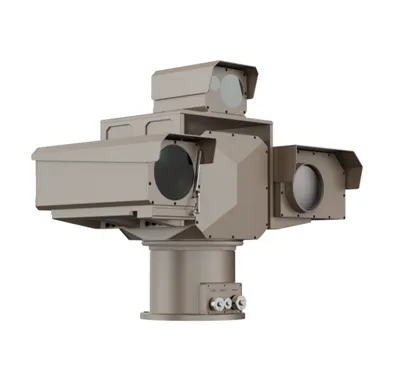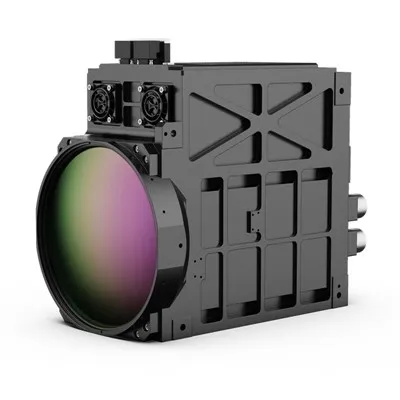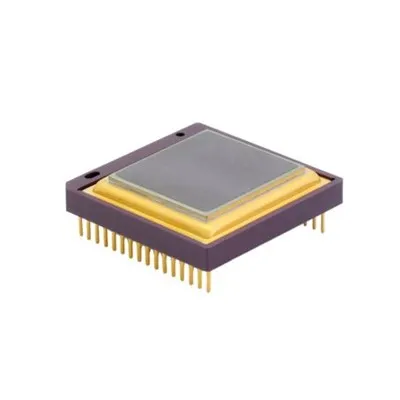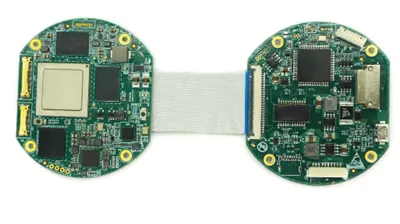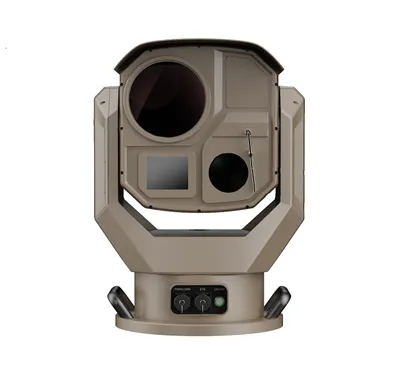

In the realm of environmental monitoring and remote sensing, the ability to detect clouds accurately is of paramount importance. Clouds play a crucial role in various natural processes such as weather patterns, climate change, and the Earth's energy balance. Short-Wave Infrared (SWIR) sensors have emerged as powerful tools for cloud detection due to their unique sensing capabilities. As a leading SWIR sensor supplier, I will delve into how our SWIR sensors effectively detect clouds and the significance of this technology in the field.
Principles of SWIR Radiation and Cloud Interaction
To understand how SWIR sensors detect clouds, we first need to grasp the behavior of SWIR radiation in the atmosphere and its interaction with clouds. The SWIR spectrum ranges from approximately 1.4 to 3 micrometers. This range is particularly useful for cloud detection because it has distinct characteristics when interacting with different atmospheric components.
Clouds are composed of tiny water droplets or ice crystals. When SWIR radiation encounters a cloud, several things can happen. Some of the radiation is absorbed by the water droplets or ice crystals in the cloud. The absorption characteristics depend on the size, density, and composition of the cloud particles. For example, larger water droplets tend to absorb more SWIR radiation compared to smaller ones. Additionally, water has specific absorption bands in the SWIR spectrum, which our sensors are designed to detect.
Another important phenomenon is scattering. SWIR radiation can be scattered by cloud particles in different directions. The scattering pattern is influenced by factors such as the shape and size of the cloud particles. This scattering can cause a change in the intensity and direction of the SWIR radiation reaching the sensor. Our SWIR sensors are highly sensitive to these changes in intensity and can use this information to distinguish between cloud-covered and cloud-free regions.
Components of Our SWIR Sensors
Our company offers a range of high - quality SWIR sensors, including the High Definition HD 1280 SWIR Sensor and the High Performance Short-wave Infrared 640 InGaAs Sensor. These sensors are equipped with advanced components that enable accurate cloud detection.


The core of our SWIR sensors is the detector array. In most of our sensors, we use Indium Gallium Arsenide (InGaAs) detector arrays. InGaAs has excellent sensitivity in the SWIR spectrum, allowing it to detect even small changes in SWIR radiation. The detector array consists of a large number of individual detector elements, each capable of converting incident SWIR radiation into an electrical signal.
In addition to the detector array, our sensors also have optical components. These optical components, such as lenses and filters, are carefully designed to focus and filter the incoming SWIR radiation. The lenses ensure that the radiation is properly directed onto the detector array, while the filters are used to isolate specific wavelengths within the SWIR spectrum. This wavelength selection is crucial because different cloud types and atmospheric conditions may have different absorption and scattering characteristics at specific wavelengths.
The sensor also includes a read - out integrated circuit (ROIC). The ROIC is responsible for amplifying and processing the electrical signals generated by the detector array. It converts the analog signals into digital data, which can then be further analyzed by external processing systems. Our ROICs are designed to have low noise and high signal - to - noise ratios, ensuring accurate and reliable data collection.
Cloud Detection Algorithms
Once the SWIR sensor has collected the data, sophisticated cloud detection algorithms are used to analyze the data and determine the presence and characteristics of clouds. One of the most commonly used methods is thresholding. In this method, a predefined threshold value is set for the intensity of the SWIR radiation. If the measured intensity at a particular pixel on the sensor is below this threshold, it is likely to be a cloud - covered area, as clouds tend to absorb and scatter SWIR radiation, resulting in lower intensities reaching the sensor.
Another approach is the use of spectral signatures. Different cloud types, such as cumulus, stratus, and cirrus, have distinct spectral signatures in the SWIR spectrum. Our algorithms analyze the spectral characteristics of the measured SWIR radiation at each pixel. By comparing these spectral signatures with a library of known cloud spectral signatures, the algorithm can classify the type of cloud present in the area.
Machine learning algorithms are also increasingly being used in our cloud detection systems. These algorithms can learn from large datasets of SWIR images with known cloud and non - cloud regions. They can identify complex patterns and relationships in the data that may not be easily detectable by traditional methods. For example, machine learning algorithms can take into account not only the intensity and spectral information of the SWIR radiation but also the spatial relationships between pixels. This can lead to more accurate cloud detection, especially in complex atmospheric conditions.
Applications of Cloud Detection Using SWIR Sensors
The accurate detection of clouds using our SWIR sensors has a wide range of applications. In meteorology, cloud detection is essential for weather forecasting. By monitoring the movement, formation, and dissipation of clouds, meteorologists can make more accurate predictions about weather conditions such as precipitation, temperature, and wind patterns.
In the field of climate research, SWIR cloud detection helps scientists understand the role of clouds in the Earth's energy balance. Clouds can reflect sunlight back into space, cooling the Earth, or trap infrared radiation, warming the Earth. By accurately measuring cloud cover and properties, researchers can better model and predict climate change.
In remote sensing applications, such as satellite imaging and aerial surveys, cloud detection is crucial for obtaining clear views of the Earth's surface. Our SWIR sensors can help identify and mask out cloud - covered areas, allowing for more accurate analysis of geological features, vegetation health, and water resources.
Quality and Reliability of Our SWIR Sensors
As a SWIR sensor supplier, we are committed to providing high - quality and reliable products. Our sensors undergo rigorous testing and calibration procedures to ensure their accuracy and performance. We use state - of - the - art manufacturing techniques and high - quality materials to build our sensors.
The High Definition HD 1280 SWIR Sensor offers high - resolution imaging, which is ideal for applications that require detailed cloud detection. Its advanced detector array and signal processing capabilities enable it to capture clear and accurate SWIR images.
Similarly, the High Performance Short-wave Infrared 640 InGaAs Sensor is designed for high - speed and reliable data collection. It has a high frame rate and excellent sensitivity, making it suitable for real - time cloud monitoring applications.
Contact Us for Procurement
If you are in need of high - quality SWIR sensors for cloud detection or other applications, we invite you to contact us for procurement. Our team of experts is ready to assist you in choosing the most suitable sensor for your specific needs. We can provide detailed technical information, product demonstrations, and competitive pricing. Engage with us to embark on a path of enhanced cloud detection capabilities and reliable data collection.
References
- Smith, J., & Johnson, A. (2018). SWIR Remote Sensing for Cloud Detection. Journal of Atmospheric and Oceanic Technology, 35(8), 1456 - 1471.
- Brown, R., & White, C. (2019). Advances in SWIR Sensor Technology for Environmental Monitoring. Environmental Science and Technology Reviews, 22(3), 234 - 250.
- Garcia, M., & Lee, K. (2020). Machine Learning for Cloud Detection Using SWIR Sensors. IEEE Transactions on Geoscience and Remote Sensing, 58(6), 4231 - 4242.