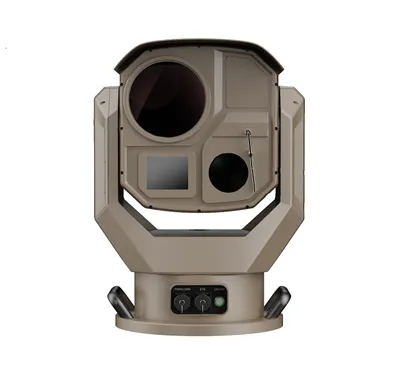

What is the altitude limit for the Thermal Optical Tracking System?
As a supplier specializing in Thermal Optical Tracking Systems, I am often asked about the altitude limit of these sophisticated devices. Understanding this limit is crucial for various applications, from counter - drone operations to border surveillance. In this blog post, I will delve into the factors that determine the altitude limit of a Thermal Optical Tracking System and discuss its implications for different scenarios.
Factors Affecting the Altitude Limit
Sensor Capabilities
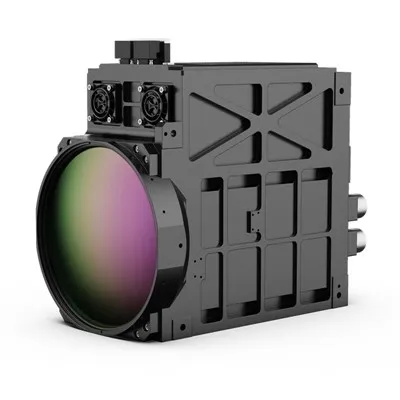
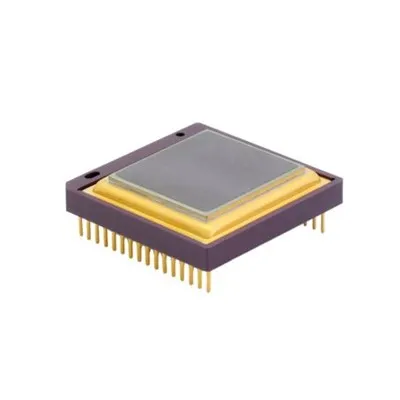
The heart of a Thermal Optical Tracking System is its sensor. Thermal sensors detect infrared radiation emitted by objects, while optical sensors rely on visible light. The sensitivity and resolution of these sensors play a significant role in determining the maximum altitude at which the system can effectively track a target.
High - end thermal sensors with a large number of pixels and high sensitivity can detect faint infrared signatures from greater distances and higher altitudes. For example, a sensor with a high thermal resolution can distinguish the heat signature of a small drone against the background thermal noise, even when the drone is flying at an altitude where it appears as a tiny dot. Similarly, optical sensors with high magnification and low - light performance can extend the tracking range to higher altitudes.
Atmospheric Conditions
The atmosphere can have a profound impact on the performance of a Thermal Optical Tracking System. Factors such as air temperature, humidity, and the presence of aerosols (e.g., dust, smoke, and fog) can absorb, scatter, or refract infrared and visible light.
In clear, dry air, the system can typically achieve its maximum theoretical altitude limit. However, in adverse conditions like heavy fog or thick smoke, the effective altitude limit can be significantly reduced. For instance, fog can scatter infrared radiation, making it difficult for the thermal sensor to detect the target, and it can also reduce visibility for the optical sensor.
Target Characteristics
The size, shape, and heat signature of the target also influence the altitude limit. Larger targets with a strong heat signature are easier to detect and track at higher altitudes compared to smaller, cooler targets. For example, a large commercial aircraft with its powerful engines radiating a significant amount of heat can be tracked at much higher altitudes than a small, battery - powered drone.


The reflectivity and emissivity of the target's surface also matter. A target with a high emissivity will emit more infrared radiation, making it more detectable by the thermal sensor.
Altitude Limits in Different Applications
Counter - Drone Operations
In counter - drone scenarios, the altitude limit of the Thermal Optical Tracking System is critical for early detection and interception. Drones can fly at various altitudes, from very low (a few meters above the ground) to several hundred meters.
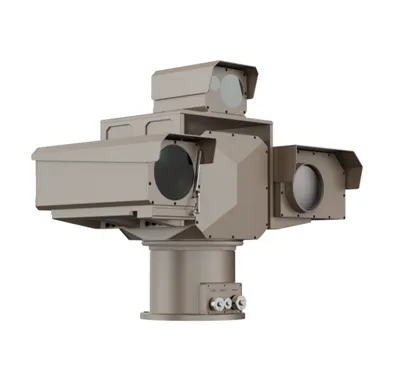
Our Heavy - Duty Counter Drone Tracking System is designed to track drones at different altitudes. In ideal atmospheric conditions, it can effectively track small drones up to an altitude of around 500 meters. This allows for sufficient time to deploy counter - measures such as jamming or net - firing systems.
Border Surveillance
For long - range border surveillance, the Thermal Optical Tracking System needs to cover a large area and detect potential threats at high altitudes. The Long Range Border Surveillance System can track targets such as unauthorized aircraft or high - flying drones at altitudes of up to 1000 meters or more. This high altitude limit is essential for early warning and border security.
Coastal Surveillance
In coastal areas, the Coastal Electro - Optical Tracking System is used to monitor the airspace and sea surface. The altitude limit in this case depends on the specific requirements of coastal security, such as detecting low - flying aircraft or drones used for smuggling. Typically, it can track targets up to an altitude of 800 meters, considering the influence of the marine environment and sea - level atmospheric conditions.
Airport Perimeter Surveillance
At airports, the Radar Integrated EO/IR System is crucial for detecting and tracking unauthorized intrusions in the airport's airspace. These systems are designed to have a high altitude limit, often reaching up to 1500 meters or more. This is necessary to ensure the safety of take - offs and landings, as well as to protect the airport from potential drone - related hazards.
Our Thermal Optical Tracking System
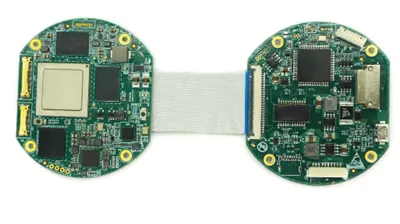
Our Thermal Optical Tracking System is at the forefront of technology, offering a combination of high - performance sensors and advanced algorithms. It can adapt to different atmospheric conditions and target characteristics, providing a reliable altitude limit for a wide range of applications.
With our system, customers can expect accurate and continuous tracking of targets at high altitudes. The system is also highly customizable, allowing us to tailor it to specific requirements, such as increasing the altitude limit for special applications.
Contact Us for Purchasing
If you are in the market for a high - quality Thermal Optical Tracking System and want to discuss the altitude limit and other specifications according to your specific needs, we encourage you to contact our sales team. We are ready to provide you with detailed information, product demonstrations, and pricing quotes.
References
- "Infrared Detectors and Systems" by Richard Rogalski
- "Optical Remote Sensing of the Atmosphere" by Thomas N. Kirkpatrick
- "Surveillance Systems: Design and Implementation" by John D. Constable